Scale, Innovation and Resilience: Our Journey Through South Africa's Citrus Powerhouse
August 2025
Following our foundational research in Spain, other members of the J&T Hort team returned to the international stage in August 2025 as part of another Citrus Australia delegation. This time to South Africa. If Spain taught us about variety excellence, South Africa demonstrated the art of large-scale production, operational resilience, and aggressive market positioning.
Why South Africa?
South Africa is globally recognised for its scale and low-cost production efficiency. As one of our biggest competitors in export markets, understanding their operational approaches, market strategies, and production challenges was essential for positioning our Narrabri operation effectively. The openness of South African growers, despite competitive dynamics, proved invaluable to our development.
A Comprehensive Industry Immersion
The 13-day tour traversed South Africa's diverse citrus regions: from Port Elizabeth through the Eastern Cape, Western Cape regions including Montagu, Franschhoek and Citrusdal, and into the northern production areas of Hoedspruit, Ohrigstad, Burgersfort and Groblersdal. We visited family operations, large-scale commercial enterprises, cooperative facilities, and industry leadership organisations.
Industry Leadership and Market Intelligence
The tour commenced with briefings from Justin Chadwick, former CEO of the Citrus Growers' Association (CGA) for 23 years, who shared South Africa's ambitious projections to reach approximately 130 million cartons by 2032, up from current levels of 30-40 million cartons. We concluded at the Agricultural Business Chamber (AGBIZ) and CGA Grower Development Company in Pretoria, hosted by CGA CEO Dr Boitshoko Ntshabele, Amy Grundling (CGA Market Liaison), and Wandile Sihlobo, Chief Economist at AGBIZ. These insights into South Africa's aggressive marketing strategies and market access challenges shaped our understanding of competitive positioning.
Research and Technical Innovation
Dr Paul Fourie and Dr Vaughan Hattingh from the Citrus Research International (CRI) joined us throughout the tour, providing scientific context to production practices. River Bioscience's offices and laboratories in Port Elizabeth, along with their XSIT technology platform, demonstrated cutting-edge approaches to orchard management and data integration.
Commercial Scale Operations
Visiting operations across multiple regions revealed the diversity of South African citrus production:
Eastern Cape: Pieter Nortje's farm in Sundays River Valley, Gustav Bell's Enduleni operation in Patensie (notable for women in management positions and innovative drought response—transporting water in tankers to dams for irrigation), and Quagga Citrus hosted by Kobus and Dirk Odendaal.
Western Cape: Unipack (hosted by George Hall and Stefan Bruwer), Denau (hosted by Fanie and Pieter Naude), Zandvliet (hosted by Ettiene van Greunen and owner Abs van Rooyen), Mouton Citrus (hosted by Boet and CP Mouton), Goedehoop Citrus cooperative (hosted by Andre Nel), and ALG (hosted by Gerrit van der Merwe, Chairman of CGA), which included packhouse, juicing plant and orchard operations.
Northern Regions: BBI Packers (hosted by CGA Director Diederick Fourie), Mahela Citrus (hosted by Eddie Vorster), Komati Citrus (hosted by Albert Winterbach), Naranja packhouse (hosted by Louis Lotter), Rosle Estate (hosted by Charles Rossouw and sons Christiaan and Jan Jacque), Schoeman Boerdery (hosted by Hendrik Schoeman), and Piet Citrus (hosted by Piet Engelbrecht and sons Willem and Coennie).
Throughout the tour, we engaged with CGA Directors including Hennie Ehlers, Hannes de Waal, Phillip Dempsey, Kaya Khatoo, and Tommie Landman, building relationships across South Africa's industry leadership.
Key Technical Learnings
Operational Scale and Efficiency
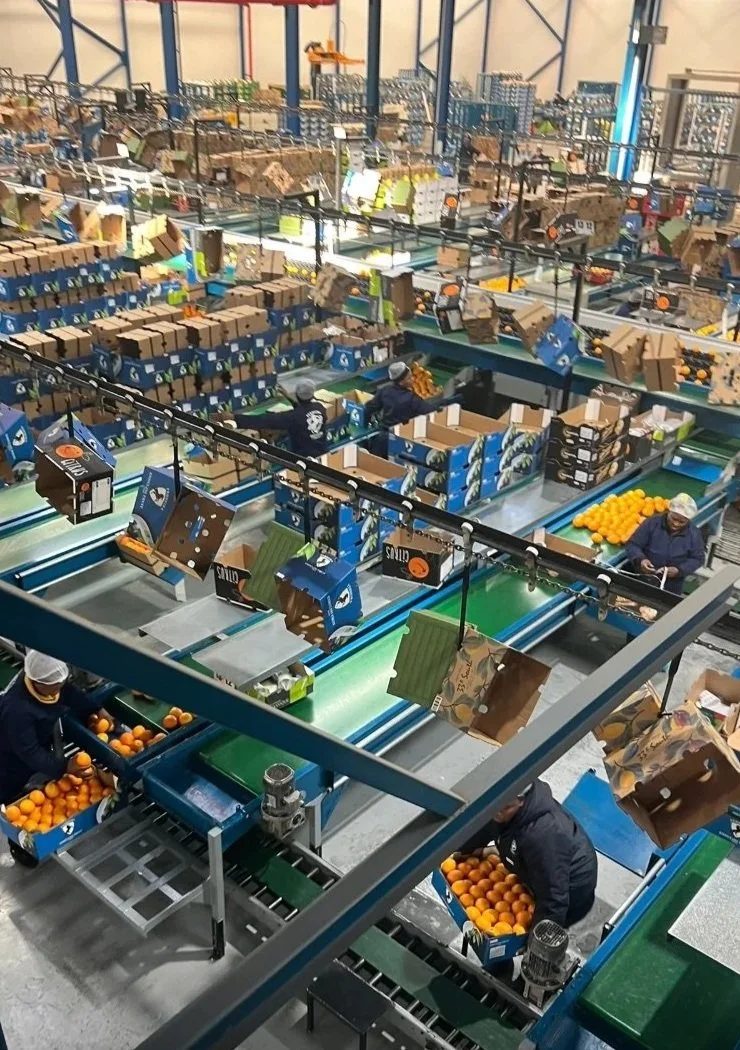
South African operations demonstrated what's possible at scale. From Schoeman Boerdery's slick operational arrangements to the integrated packhouse and orchard systems at multiple facilities, we observed sophisticated logistics, workforce management, and production coordination that our Narrabri operation can learn from as we scale up.
Water Resilience and Innovation
Enduleni's drought response saw transporting water in tankers to dams for orchard irrigation which demonstrated the extreme measures taken to maintain production during water scarcity. This reinforced the strategic value of our reliable water position in Narrabri and validated our investment in efficient drip irrigation infrastructure from the outset.
Premium Positioning Within Scale
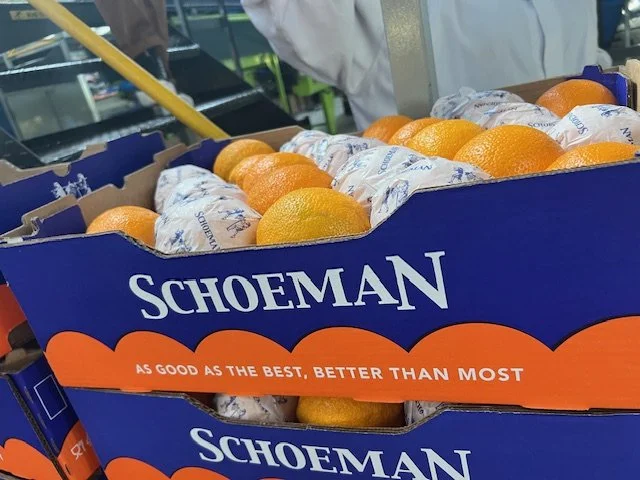
Despite South Africa's reputation for low-cost production, we observed premium approaches throughout the tour. The paper-wrapping of individual fruit (soaked in water and wrung out before wrapping) for extended shelf life and premium market positioning demonstrated that scale and quality aren't mutually exclusive. Hand-packing premiums remain significant even in highly automated facilities.
Vertical Integration Models
Operations like ALG, with packhouse, juicing plant and orchard integration, demonstrated complete supply chain control. This model influences our thinking about future packing shed capabilities and potential value-adding opportunities beyond fresh fruit export.
Family Business Values
The strong family values were evident at Rosle Estate, Schoeman Boerdery, and Piet Citrus. Operations successfully transitioning across generations providing insights into sustainable business structures. These multi-generational operations balance innovation with proven practices, a philosophy that aligns with our own family-based approach at J&T Hort.
Cooperative Models
Goedehoop Citrus demonstrated the cooperative packing house model, offering insights into alternative business structures that share infrastructure costs and market access among multiple growers. Understanding these models helps us appreciate the value of our partnership approach with established exporters like Sharps Fruit.
Challenges and Competitive Realities
Market Access Constraints
South Africa's political ties with Russia create market access challenges through tariffs in certain markets. While South Africa is aggressively pursuing Asian markets, they face longer timeframes than Australian producers. Conversely, Australian producers like J&T Hort have advantages in accessing EU markets due to meeting ESG requirements that South Africa struggles with.
Social and Structural Issues
Corruption levels and social issues in South Africa create operational challenges that Australian producers don't face. These structural disadvantages, combined with our superior ESG positioning, provide competitive advantages for Australian citrus in premium markets.
Production Projections
South Africa's projection to 130 million cartons by 2032 represents aggressive growth that will increase competition in our target markets. However, their scale focus differs from our quality and premium positioning strategy. Understanding their trajectory helps us identify market gaps and positioning opportunities.
Relationships and Industry Culture
The openness of South African growers was remarkable. Despite being competitors in export markets, operations across all regions freely shared their successes, challenges, and learnings. From the long table lunch at Blue Mountain Inn (with South Africans on one side and Australians on the other) to intimate discussions in boardrooms and orchards, the collaborative spirit reinforced that citrus industry success is built on shared knowledge.
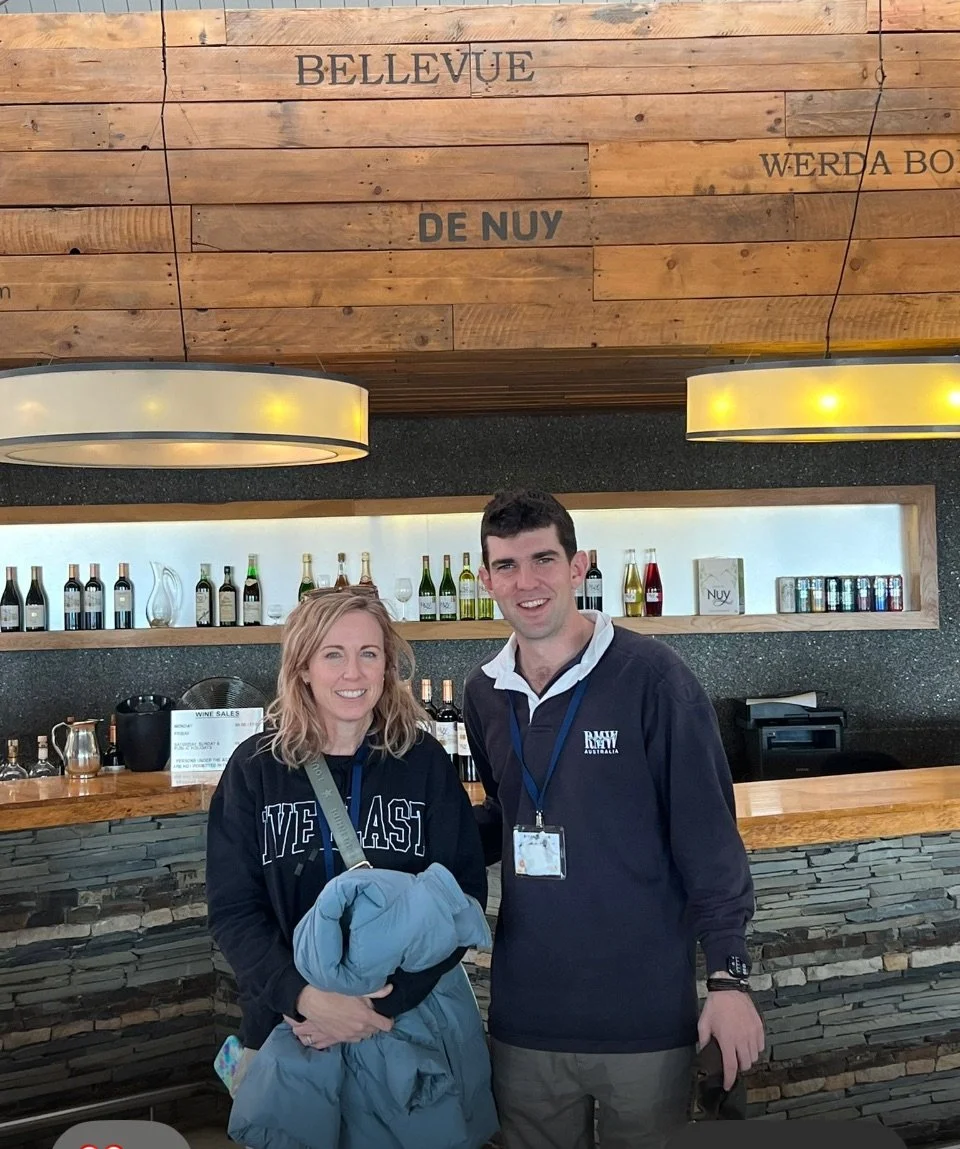
The hospitality extended from braais to wine tastings to game drives through Kruger National Park and Addo Elephant Park all allowed for the creation of relationships beyond business. These connections will prove valuable as we navigate export markets and continue learning from established producers.
Applying Global Learning to Local Advantage
South Africa operates at a scale we're working toward, but with challenges we're fortunate to avoid. Their water scarcity issues (requiring extreme drought responses) contrast with our reliable Narrabri water position. Their market access constraints through political ties contrast with our ESG advantages. Their social challenges contrast with our stable operational environment.
Yet their technical excellence, operational efficiency, and aggressive market positioning provide blueprints for our own development. The family business values, vertical integration thinking, and premium approaches within large-scale operations align with our vision for J&T Hort.
Looking Forward
Combined with our Spain learnings, the South Africa tour completed our international research foundation. We've observed variety excellence in Spain, scale and resilience in South Africa, and throughout both tours, the collaborative industry culture that makes citrus unique.
Our first commercial harvest remains on track for 2027, with processing commencing at our Narrabri packing shed in 2028. Every decision from our 300-hectare scale to our drip irrigation design, our variety selection informed by Spanish breeders, to our operational efficiency influenced by South African models reflects global best practice adapted to our unique Narrabri advantages.
The confidence to plant 14,000 trees in three days, to invest in sophisticated infrastructure, and to target premium export markets stems from thorough research across two continents and genuine relationships with industry leaders worldwide.
J&T Hort is establishing a 300-hectare citrus operation in Narrabri, NSW, with first commercial production expected in 2027. Our research journey continues as we share insights from building a modern Australian citrus enterprise positioned for global markets.