
Learning from the Best: Our Journey to Spain's Citrus Heartland
February 2024
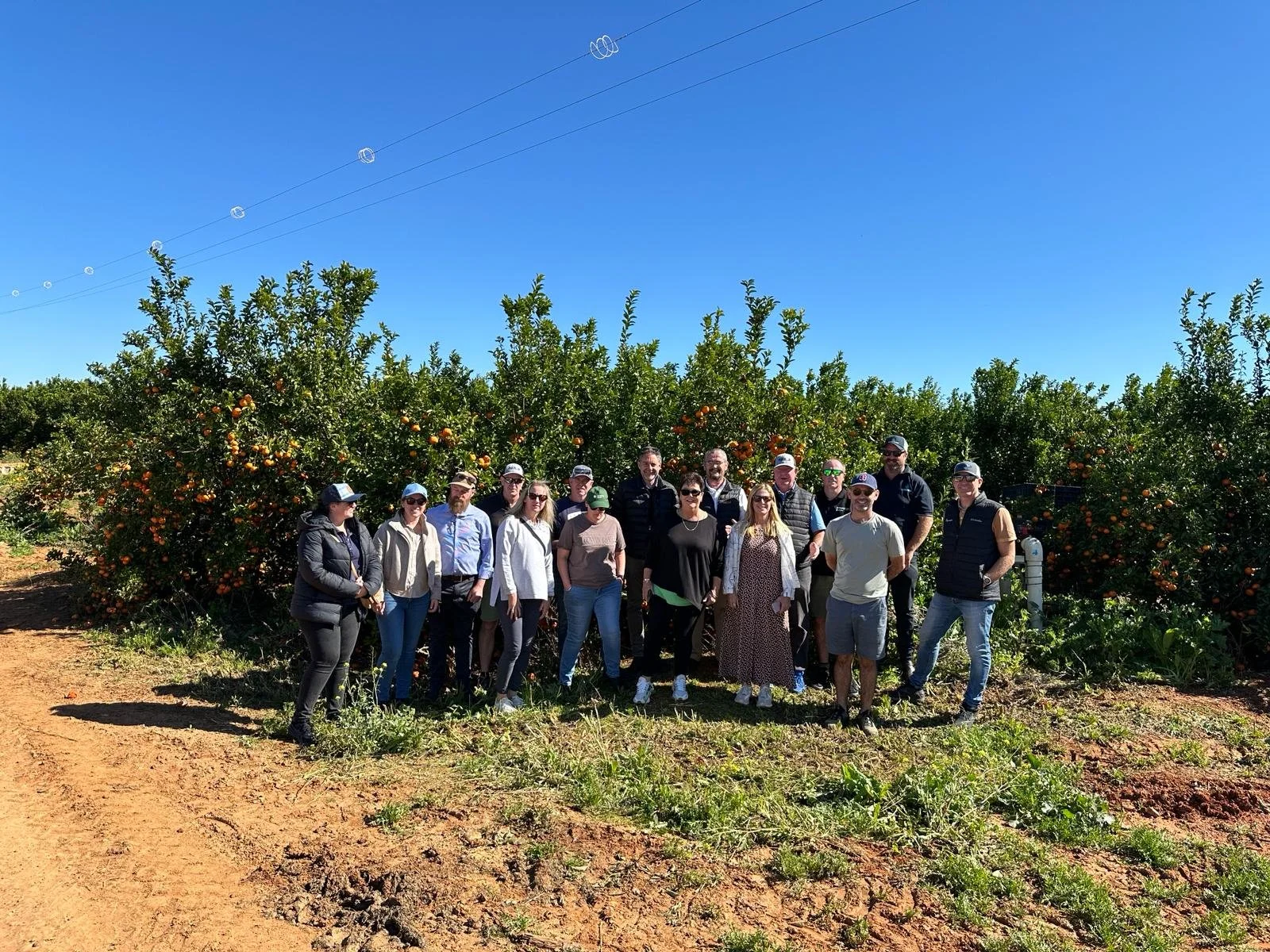
At J&T Hort, we believe building a successful citrus operation starts with learning from the world's best. That's why, in February 2024, some of our team travelled to Spain as part of a Citrus Australia delegation. Not as established growers, but as researchers committed to doing things right from the beginning.
Why Spain?
Spain is globally recognised for its expertise in citrus variety development and selection. With our 300-hectare citrus operation in Narrabri still in the planning stages, we knew that understanding Spanish approaches to variety selection would be crucial to our success. The northern hemisphere timing means we're not competing directly with Spanish producers, making this knowledge-sharing particularly valuable for our export strategy targeting Asian markets.
A Comprehensive Research Journey
The 10-day tour took us through Spain's major citrus regions—from Barcelona through Valencia, Alicante, Murcia, Granada, Huelva and Sevilla. We visited leading research institutions, innovative packing facilities, and commercial operations at various scales.
Research and Innovation Centres
At IVIA (Instituto Valenciano de Investigaciones Agrarias) in Valencia, we examined cutting-edge research on HLB disease management, rootstock development, and new variety trials. The University Miguel Hernandez in Orihuela provided insights into pre-harvest calcium and glycine betaine applications that improve post-harvest outcomes and reduce chilling injury—critical knowledge for our export program.
Variety Development Leaders
We met with Spain's foremost variety developers including Citrus Genesis (part of AM Fresh), GCM, Biogold EM, and Agrosemillas. These visits were particularly valuable, as many of the new varieties being developed won't be available in Australia for approximately five years due to biosecurity requirements. Understanding what's in the development pipeline helps us make informed long-term planning decisions.
Commercial Operations
Visiting commercial packing facilities operated by organisations like Cheste Agraria Coop, Mundosol, Perales y Ferrer, Agrios del Carril, and Garcia Aranda revealed the full spectrum of citrus operations. The Citrus Australia delegation expertly showcased industry-leading facilities alongside struggling operations, providing invaluable perspective on what drives success and what leads to failure.
Key Technical Learnings
Orchard Management Standards
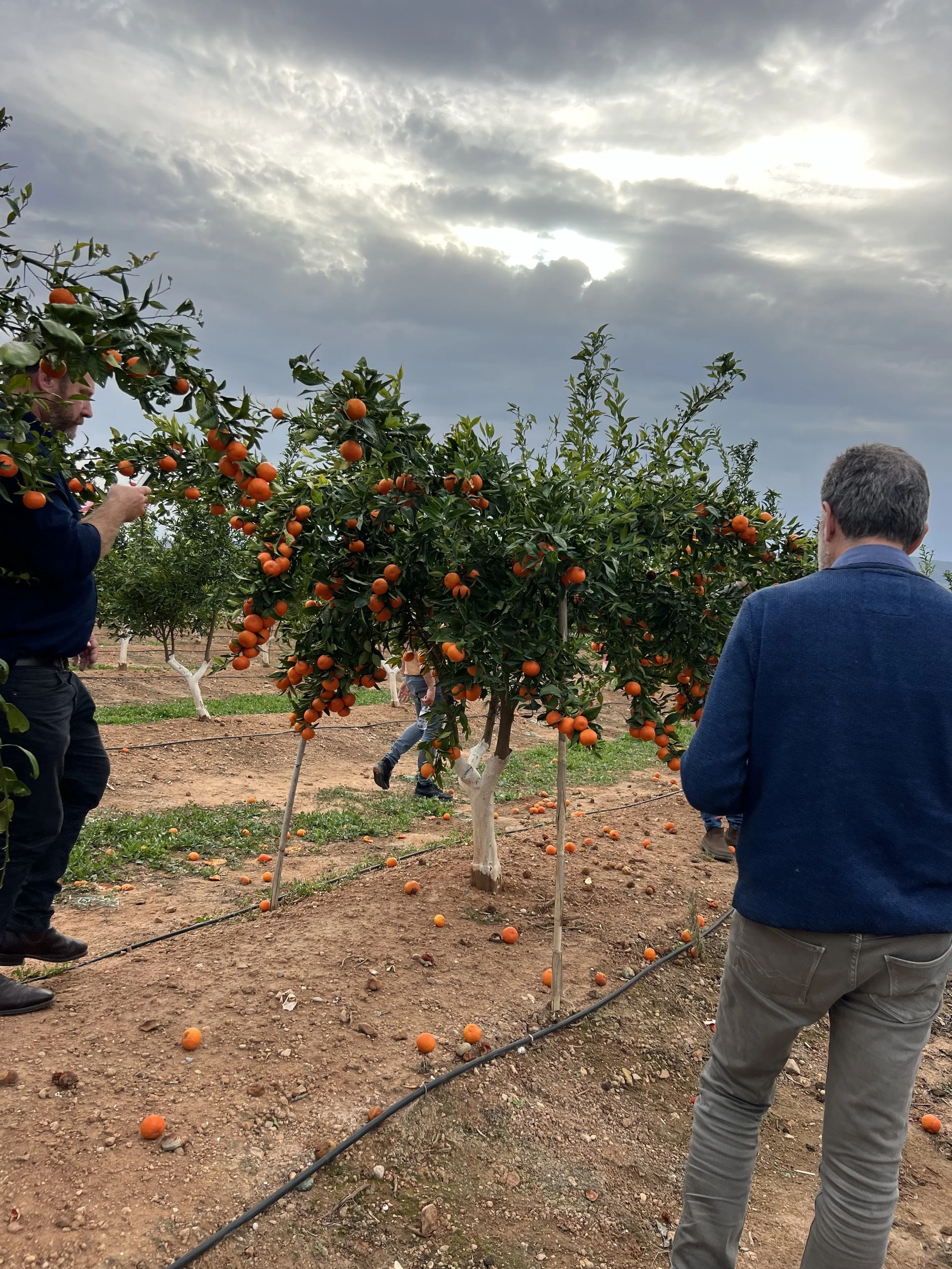
We observed operations ranging from spotless facilities to orchards where weeds grew as high as the trees themselves. This contrast emphasised the critical importance of orchard hygiene and consistent management practices. Operations with simple, science-based approaches often outperformed those applying excessive inputs without strategic planning.
Nutrition and Precision Agriculture
Spanish experts, along with industry partners like Idai Nature, Symborg-Corteva, and Masso, demonstrated that citrus are less nutritionally intensive than crops like almonds. The key insight: trees won't necessarily utilise excessive inputs. Success comes from understanding the science and maintaining straightforward, effective management practices.
Advanced Packing Technology
The AM Fresh packing facility and tours organised by technology leaders like Tomra and Giro showcased the latest in automation and AI integration. However, we learned that despite this automation, supermarkets still pay significant premiums for hand-packed fruit. This attention to quality and presentation aligns perfectly with our target Asian markets, where presentation is culturally significant.
Agronomy and Post-Harvest Innovation
Visits with industry leaders Servalesa, Fitogar, and farm operations throughout southern Murcia demonstrated integrated approaches to production and post-harvest management. Understanding the complete supply chain—from orchard to consumer—has shaped our entire operational design.
Reality Check: Water and Climate
Spain's expertise exists despite challenging conditions. Many regions we visited were experiencing severe drought, with some growers considering removing trees due to water allocation issues. This emphasised the value of our strong water position in Narrabri and reinforced our decision to implement efficient drip irrigation from the outset.
Seeing what Spanish growers achieve in less fertile soil conditions than ours reinforced our confidence that we're positioned in what we call the "Goldilocks zone": not too hot, not too cold, with excellent soil, optimal chill hours, and reliable water resources.
Building Industry Relationships
The citrus industry's collaborative culture stood out immediately. Despite being potential competitors, established growers, researchers, and commercial operators openly shared their successes and failures. From edp/Giro's operational insights in Barcelona to hands-on farm visits with growers like Angel Mateo in southern Murcia, the generosity of knowledge-sharing has been invaluable.
This openness has shaped our approach at J&T Hort. We're committed to contributing to this collaborative culture as we develop, sharing our learnings and supporting others entering the industry.
Applying Global Knowledge Locally
The Spain tour was just the beginning of our research journey. Combined with subsequent learning from South Africa and ongoing mentorship from Australian industry leaders like Sharps Fruit and Chiseletts Nursery, we're building our operation on a foundation of global best practice adapted to Narrabri's unique advantages.
Every decision we make, from variety selection informed by Citrus Genesis to irrigation design and packing house specifications, reflects the lessons learned from walking through Spanish orchards and asking questions as researchers - not experts.
Looking Forward
Our first commercial harvest is expected in 2027, with processing commencing at our Narrabri packing shed in 2028. The six months we spent evaluating varieties after the Spain tour reflect the complexity and importance of those decisions. We're selecting varieties that will serve Australian and Asian markets for decades to come.
That commitment to thorough research, combined with the openness of the global citrus community, gives us confidence that we're building something sustainable and valuable for the long term.

J&T Hort is establishing a 300-hectare citrus operation in Narrabri, NSW, with first commercial production expected in 2027. Follow our journey as we share insights from building a modern Australian citrus enterprise.